French Christmas traditions you should know, with the words you’ll hear all December.
In France, Christmas is called Noël, and the whole holiday season is les fêtes de fin d’année. It starts in late November, just after the Beaujolais nouveau, when the first lights go up. Let’s go through it step by step, the French way.
1. Advent: counting down to Christmas
L’Avent (Advent) starts four Sundays before Christmas. For most French families, it means one thing: le calendrier de l’Avent, the Advent calendar. Children open one little window every morning from 1 December, usually to find a chocolate inside.
In some homes, especially in Alsace and in church-going families, you’ll also see la couronne de l’Avent, the Advent wreath. It has four candles, and you light one more each Sunday.
- le calendrier de l’Avent the Advent calendar
- la couronne de l’Avent the Advent wreath
- une bougie a candle
2. Christmas markets: Strasbourg and beyond
From late November, wooden huts pop up in town squares all over France. This is le marché de Noël, the Christmas market. People stroll between les chalets (the huts), buy decorations and small gifts, and warm up with a cup of vin chaud, hot spiced wine.
The most famous one is in Strasbourg. Its market, the Christkindelsmärik, dates back to 1570, which makes it one of the oldest in Europe. The city calls itself la capitale de Noël, and with over 300 huts spread across the old town, it’s easy to see why. Try les bredele, small Alsatian Christmas biscuits, and le pain d’épices, gingerbread.
If Strasbourg is too crowded, Colmar is just as pretty, and Reims, Lille and Metz all have lovely markets too.
- le marché de Noël the Christmas market
- un chalet a wooden hut (at the market)
- le vin chaud mulled wine
- le pain d’épices gingerbread
3. Decorations: the tree, the nativity scene and the lights
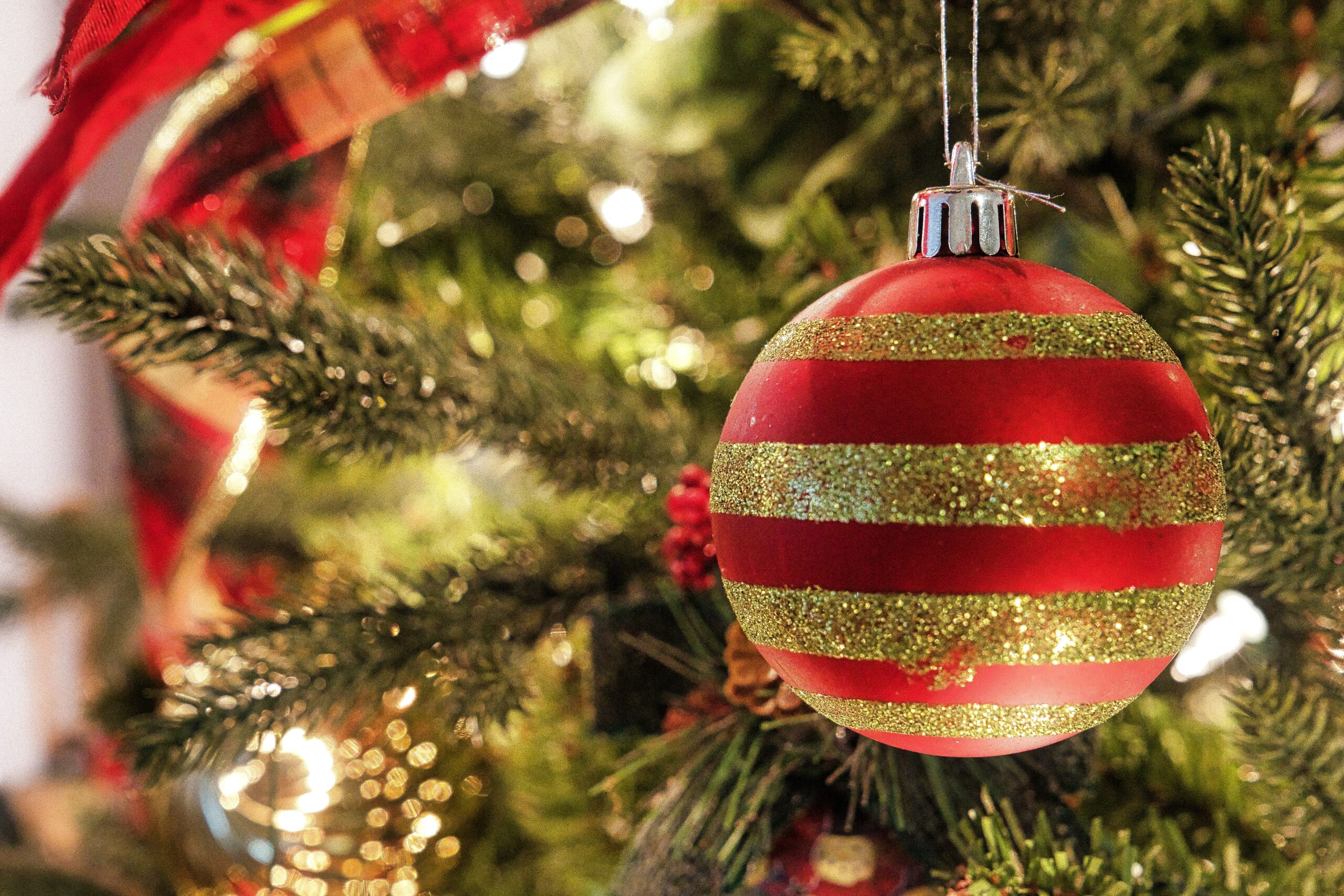
Most families put up le sapin de Noël, the Christmas tree, in early December. They decorate it with des boules (baubles), des guirlandes (tinsel or fairy lights) and une étoile (a star) on top.
Many homes also have une crèche, a nativity scene. In Provence, it’s a real tradition: families fill it with des santons, small painted clay figures. Alongside Mary, Joseph and the shepherds, you’ll find the whole village: the baker, the fishwife, the knife grinder.
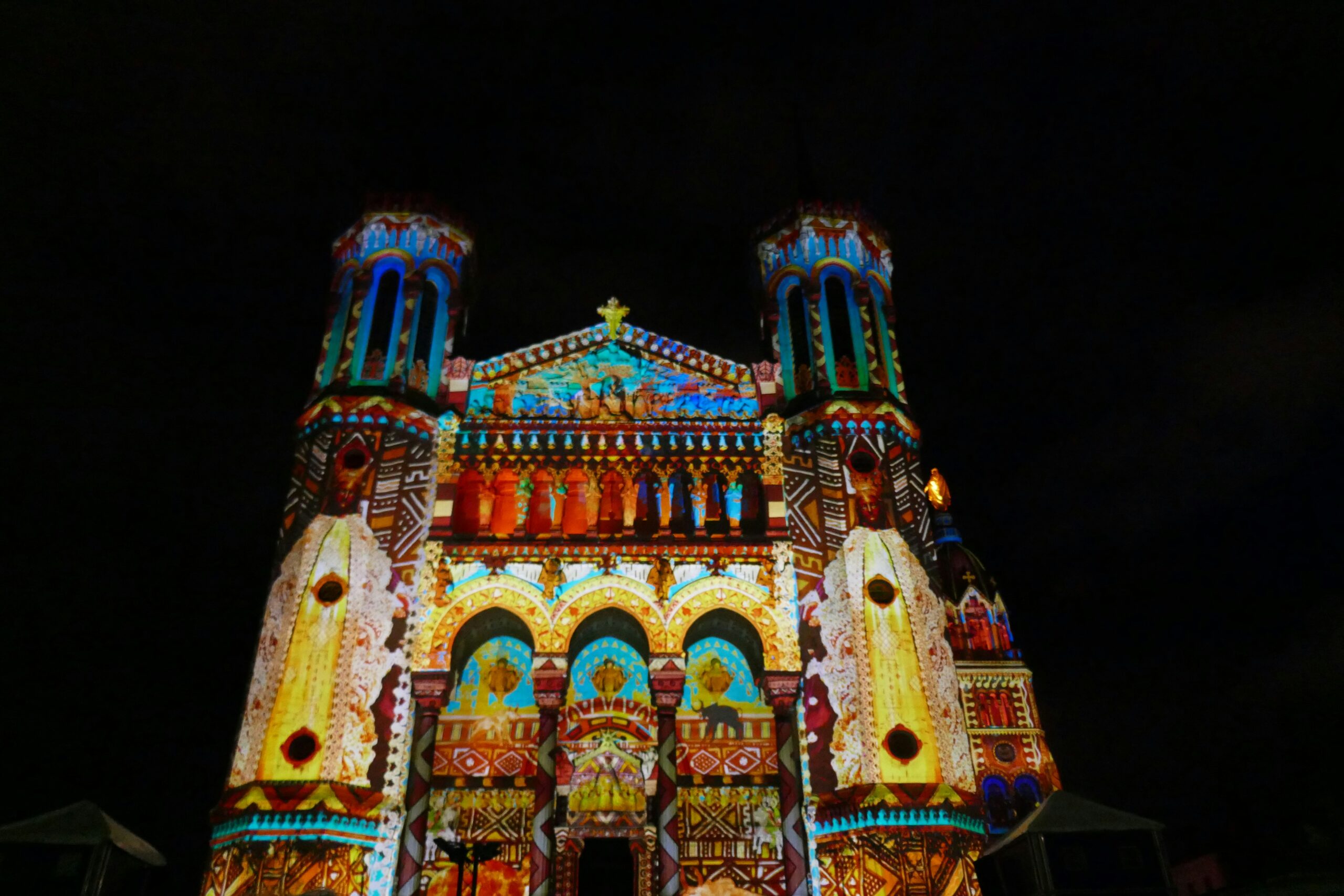
In the streets, towns hang les illuminations, the Christmas lights. In Lyon, the season even opens with a festival of lights, la Fête des Lumières, around 8 December.
- le sapin de Noël the Christmas tree
- une boule de Noël a bauble
- une guirlande tinsel, a string of lights
- la crèche the nativity scene
- les illuminations the Christmas lights (in town)
4. Christmas Eve: the big night
In France, the big celebration is on the evening of 24 December. This dinner is called le réveillon de Noël, from the verb réveiller (to wake up), because it goes on late into the night. The whole family gathers, often with grandparents, aunts and cousins.
Some people go to la messe de minuit, midnight mass, though many churches now hold it earlier in the evening.
Before going to bed, children put their shoes at the foot of the tree. During the night, le Père Noël (Father Christmas) comes down the chimney and leaves les cadeaux, the presents. Some families open them on the morning of the 25th, others right after midnight.
- le réveillon de Noël Christmas Eve dinner
- la messe de minuit midnight mass
- le Père Noël Father Christmas, Santa
- un cadeau a present
- ouvrir les cadeaux to open the presents
5. The Christmas meal
The French Christmas dinner is long, rich and taken very seriously. A classic menu might look like this:
- les huîtres oysters, often with a glass of white wine
- le foie gras, served on toast with a sweet onion chutney or fig jam
- le saumon fumé smoked salmon
- la dinde aux marrons turkey with chestnuts, or le chapon capon
- la bûche de Noël the Yule log, a rolled sponge cake shaped like a log, with chocolate or chestnut cream. Most families order theirs at the bakery a few days before (here’s how to order at a French bakery)
- le champagne to finish
In Provence, there’s an extra tradition: les treize desserts, thirteen desserts for the thirteen people at the Last Supper. They include dried fruit and nuts, black and white nougat, dates, fresh fruit, and la pompe à l’huile, a sweet bread made with olive oil. Everyone tastes a little of each one.
6. Useful phrases for the holiday season
Joyeux Noël !
Merry Christmas!
Bonnes fêtes !
Happy holidays!
You’ll hear it everywhere in December: in shops, at work, from your neighbours.
Bonnes fêtes de fin d’année !
Season’s greetings!
The longer version, perfect for emails and cards.
Tu fais quoi pour Noël ?
What are you doing for Christmas?
The question everyone asks in December.
On passe Noël chez mes parents.
We’re spending Christmas at my parents’.
Qu’est-ce que tu as eu pour Noël ?
What did you get for Christmas?
The question everyone asks after the 25th.
7. French Christmas vocabulary list
| French | English |
|---|---|
| Advent | |
| le calendrier de l’Avent | the Advent calendar |
| la couronne de l’Avent | the Advent wreath |
| une bougie | a candle |
| At the Christmas market | |
| le marché de Noël | the Christmas market |
| un chalet | a wooden hut |
| le vin chaud | mulled wine |
| le pain d’épices | gingerbread |
| les bredele | Alsatian Christmas biscuits |
| Decorations | |
| le sapin de Noël | the Christmas tree |
| une boule de Noël | a bauble |
| une guirlande | tinsel, a string of lights |
| une étoile | a star |
| la crèche | the nativity scene |
| un santon | a clay nativity figure |
| les illuminations | the Christmas lights (in town) |
| Christmas Eve | |
| le réveillon de Noël | Christmas Eve dinner |
| la messe de minuit | midnight mass |
| le Père Noël | Father Christmas, Santa |
| un cadeau | a present |
| ouvrir les cadeaux | to open the presents |
| The Christmas meal | |
| les huîtres | oysters |
| le foie gras | foie gras |
| le saumon fumé | smoked salmon |
| la dinde aux marrons | turkey with chestnuts |
| le chapon | capon |
| la bûche de Noël | the Yule log |
| les treize desserts | the thirteen desserts (Provence) |
8. Practise with Interactive Scenes
Reading about Christmas is good, but speaking is better. Step into these scenes and practise the French you’ll need in December:
[Scene link to add: Christmas market]
[Scene link to add: Christmas Eve with the in-laws]
Joyeux Noël, and see you in the next scene!