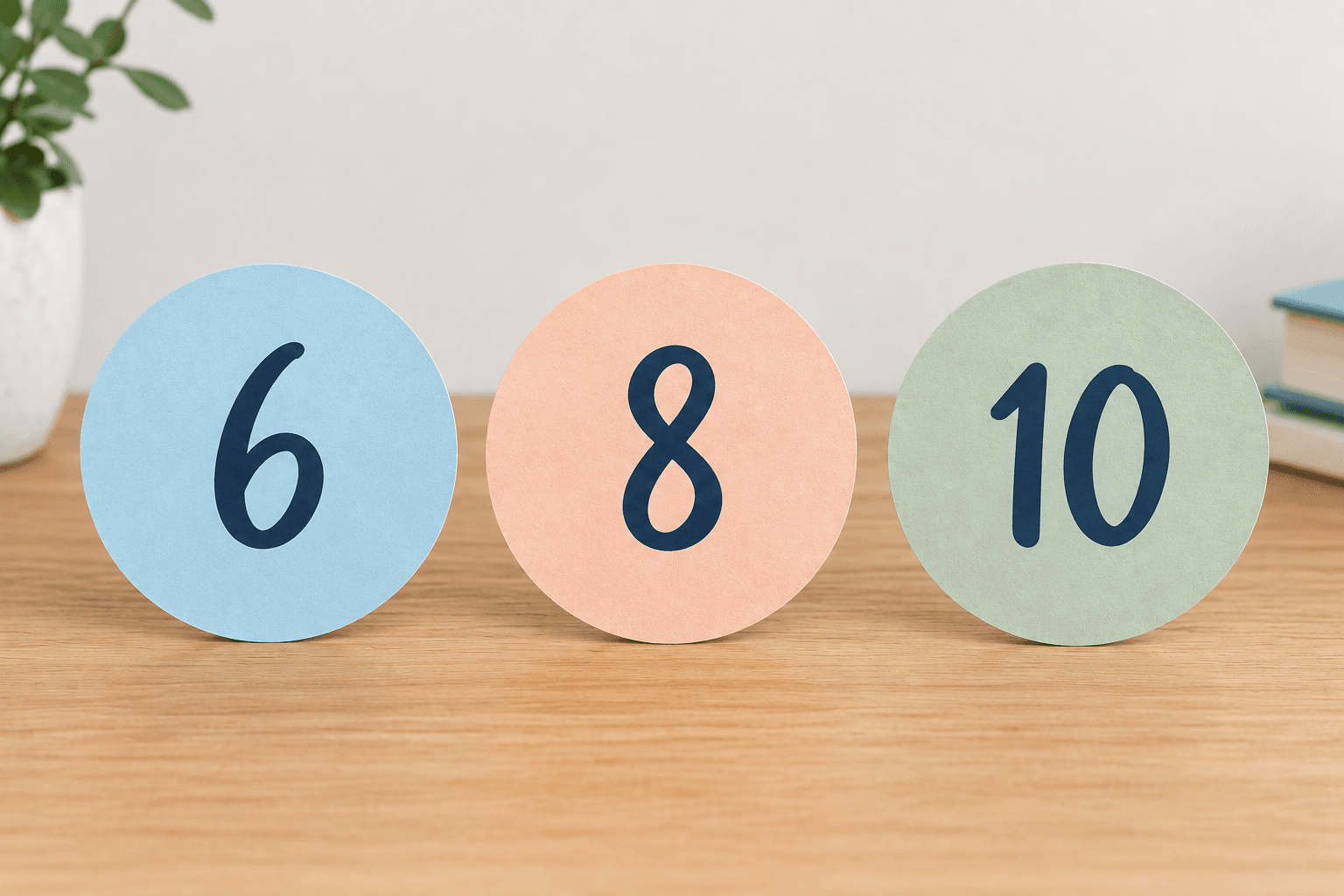
Here is something most textbooks never tell you: six, huit, and dix are not pronounced the same way twice. The ending changes depending on what comes right after the number. Once you hear the pattern, you will start noticing it everywhere in real French.
Alone or at the End of a Sentence
The final consonant is pronounced in full.
- Combien de croissants est-ce que vous voulez ? Six. [sis] — How many croissants would you like? Six.
- Vous êtes combien dans votre famille ? Huit. [ɥit] — How many are you in your family? Eight.
- Combien de candidats ont réussi l’examen ? Dix. [dis] — How many candidates passed the exam? Ten.
Listen to the audio here.
Before a Consonant
The final consonant disappears.
- Je voudrais six croissants. [si kʁwasɑ̃] — I would like six croissants.
- Nous avons attendu huit jours. [ɥi ʒuʁ] — We waited eight days.
- Il y a dix personnes dans ce groupe. [di zɑ̃fɑ̃] — There are ten people in this group.
Listen to the audio here.
Before a Vowel or a Mute H
Liaison applies: the consonant comes back and attaches to the next word.
- Mon fils a six ans. [si zɑ̃] — My son is six years old.
- Le magasin ouvre à huit heures. [ɥi tœʁ] — The store opens at eight o’clock.
- Elle garde dix enfants le mercredi. [di zɑ̃fɑ̃] — She looks after ten children on Wednesdays.
Listen to the audio here.
Six and dix use a Z sound in liaison. Huit uses a T. Standard liaison, nothing unusual there.
Summary Table
| Number | Alone | Before consonant | Before vowel |
|---|---|---|---|
| six (6) | [sis] | [si] | [si] + Z |
| huit (8) | [ɥit] | [ɥi] | [ɥi] + T |
| dix (10) | [dis] | [di] | [di] + Z |
Conclusion
Six, huit, and dix are three of the most frequent numbers in everyday French, which means this pattern comes up constantly: giving your age, telling time, ordering food, counting people in a room. Learning the three positions now will save you from sounding hesitant later, once these numbers stop being isolated vocabulary and start showing up inside real sentences.