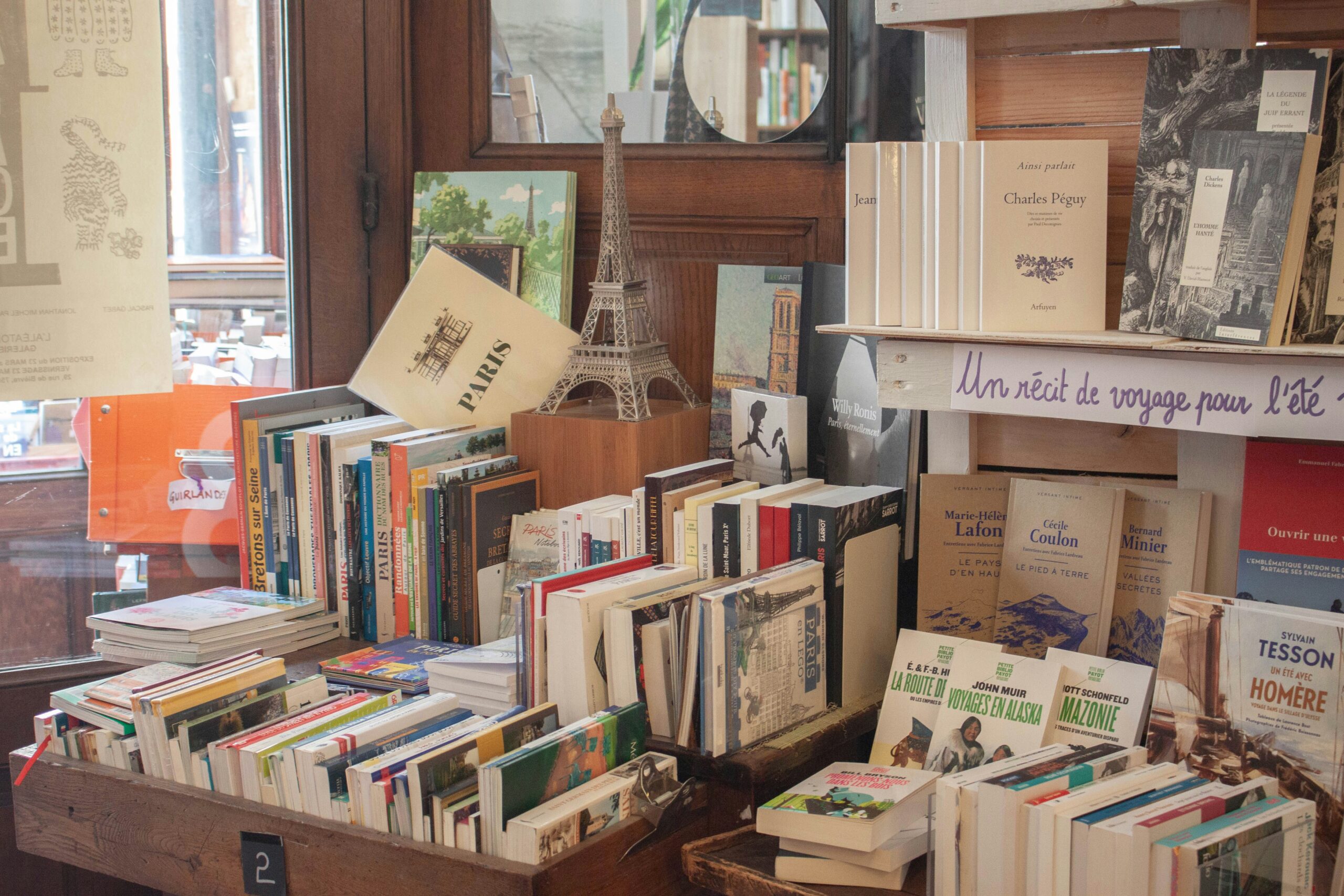
Every November, one French book suddenly appears in every bookshop window in France, wrapped in a bright red band. That book has just won the Prix Goncourt.
Quick answer: the Prix Goncourt is France’s most famous literary prize. It has been awarded every year since 1903 to a work of fiction written in French. The 2026 winner is Philippe Jaenada, for L’Inconnue du quai de Javel.
How do you pronounce “Goncourt”?
Say “gon-KOOR”. The final t is silent, and the “on” is a nasal sound, so your tongue never touches the roof of your mouth for an n.
Where does the prize come from?
The prize is named after the Goncourt brothers, Edmond and Jules, two 19th-century writers. When Edmond died in 1896, he left his fortune to create a literary academy and a prize.
Today, the Académie Goncourt normally has ten members, and they choose the winner. Since 1914, the result has been announced at Drouant, a restaurant in Paris.
Three things that surprise people
1. The prize money is only 10 euros. The winner receives a symbolic cheque. The real reward comes afterwards, because a Goncourt can sell hundreds of thousands of copies.
2. You can only win once. Romain Gary still managed to win twice: in 1956 under his own name, and in 1975 under the pen name Émile Ajar. The truth only came out after his death.
3. It is a great gift idea. The announcement comes just before the Christmas shopping season, and many French people give the winning book as a present.
The 2026 winner
Philippe Jaenada won on 3 November 2026, by six votes to three. L’Inconnue du quai de Javel (Flammarion) goes back to a murder committed in Paris in 1949. Jaenada investigates the case himself, in his very recognisable style, full of long digressions in brackets.
How to give your opinion on a book in French
| French | English |
|---|---|
| Tu l’as lu ? | Have you read it? |
| Je l’ai adoré. | I loved it. |
| Ça vaut le coup. | It’s worth it. |
| Je pense que c’est un grand livre. | I think it’s a great book. |
| Je ne pense pas que ce soit facile à lire. | I don’t think it’s easy to read. |
| Je ne suis pas sûr(e) que ce soit pour moi. | I’m not sure it’s for me. |
Look closely at the last three lines. Je pense que takes the indicative (c’est). In the negative, or when you express doubt, French usually switches to the subjunctive (ce soit). It’s a small change, but it’s what makes your French sound natural at B2 level.