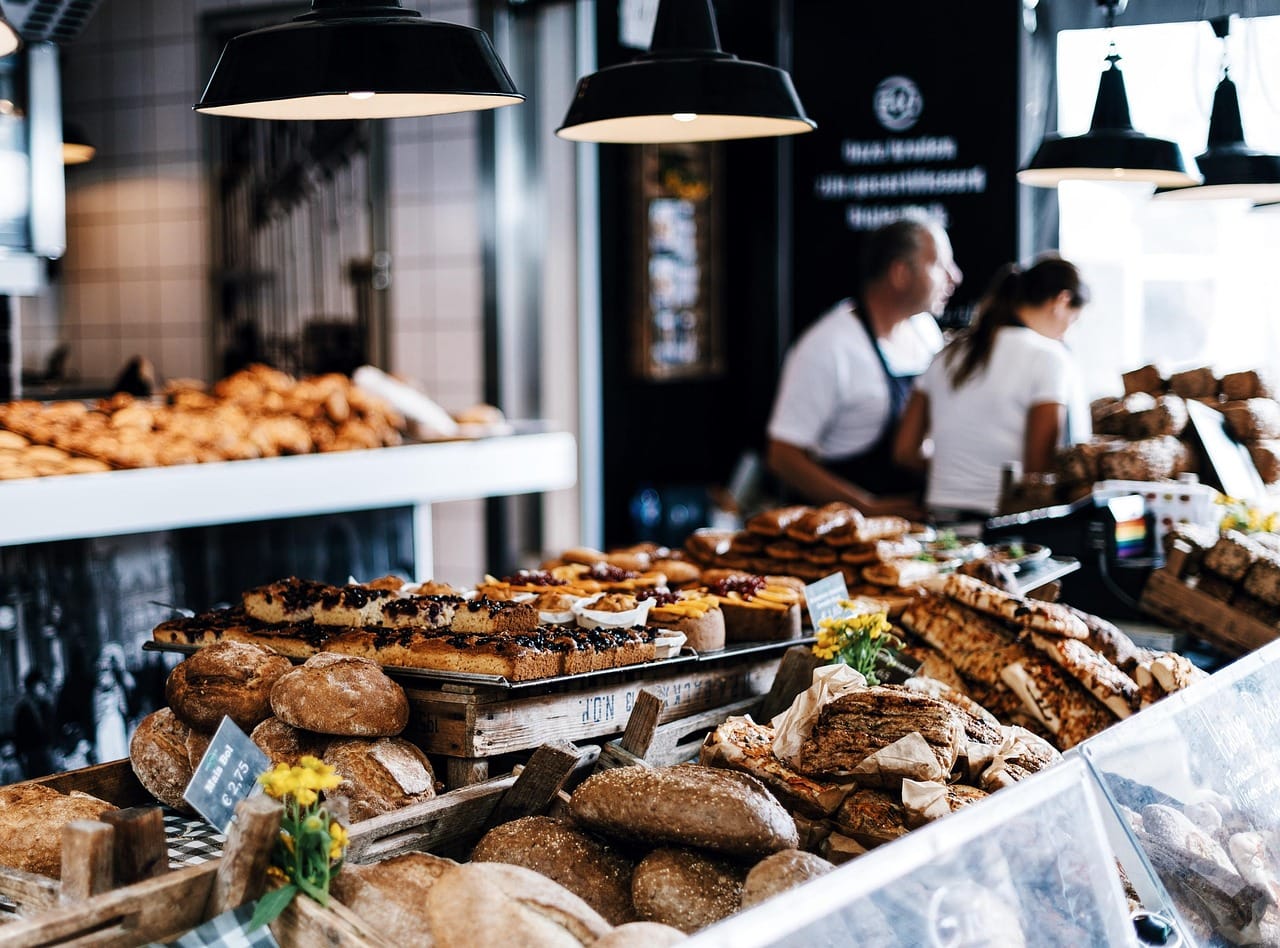
You push open the door. The smell of warm butter hits you. There’s a line, a chalkboard menu you can half-read, and a baker who’s already looking at you, waiting.
And suddenly you forget every word of French you know.
Here’s exactly what to say, step by step, so you walk out with your baguette and satisfaction.
Quick Answer
To order at a French bakery, say:
Bonjour, je voudrais… s’il vous plaît.
Example:
Bonjour, je voudrais une baguette, s’il vous plaît.
Three words carry the whole interaction: bonjour, voudrais, merci.
Step 1: Always Say “Bonjour”
In France, you greet the person before you ask them for anything. Walking up and ordering without a bonjour isn’t just impolite, it can make the whole exchange feel colder, even if your French is perfect afterward.
Say:
Bonjour.
In the evening:
Bonsoir.
Step 2: Use “Je voudrais… s’il vous plaît”
The most natural, polite way to order is:
Je voudrais… (I would like…)
Example:
- Je voudrais une baguette.
- Je voudrais un croissant.
- Je voudrais deux pains au chocolat.
Always close the sentence with s’il vous plaît, it’s not optional politeness, it’s part of the standard phrase. Without it, “je voudrais une baguette” on its own can sound slightly clipped.
(Quick aside: you’ll also sometimes hear “je vais prendre…” (“I’ll take…” ) used just as commonly as “je voudrais,” especially by younger speakers.)
Common Bakery Vocabulary
🥖 Bread & Viennoiseries
| French | English |
|---|---|
| Une baguette | A baguette |
| Une baguette tradition | Traditional baguette |
| Un croissant | A croissant |
| Un pain au chocolat | Chocolate pastry |
| Un pain aux raisins | Raisin pastry |
| Une brioche | Brioche |
| Bien cuite | Well-baked / crispy |
| Pas trop cuite | Not too baked |
🍰 Desserts & Pastries
| French | English |
|---|---|
| Une tarte | Tart |
| Une tarte au citron | Lemon tart |
| Une part | A slice |
| Un éclair | Éclair |
| Un macaron | Macaron |
| Un mille-feuille | Mille-feuille |
| Une pâtisserie | Pastry |
🥪 Savory & Useful Expressions
| French | English |
|---|---|
| Une quiche | Quiche |
| Un sandwich jambon-beurre | Ham and butter sandwich |
| Une formule | Meal deal |
| À emporter | Takeaway |
| Sur place | Eat in |
| Un sac | A bag |
If They Ask You a Question
If They Ask “Avec ceci?”
The baker might say:
Avec ceci ? (“Anything else?”)
You can answer:
- C’est tout bon, merci.
- Oui, je voudrais aussi…
If They Ask “Ce sera tout ?”
This means “Will that be all?” Answer:
- Oui, merci.
- Oui, ce sera tout.
Paying
The baker may say:
Ça fait 4 euros 50.
To respond:
- Voilà.
- Merci.
- Bonne journée.
If you need a bag: Un sac, s’il vous plaît.
Full Example Dialogue
Customer: Bonjour, je voudrais une tradition et deux croissants, s’il vous plaît.
Baker: Avec ceci ?
Customer: C’est tout bon, merci.
Baker: Ça fait 5 euros 20.
Customer: Voilà. Merci, bonne journée.
Baker: Merci, à vous aussi !
Cultural Tips
- Always say “bonjour” first.
- Use vous with the baker (this isn’t the place for tu.)
- Say “merci” when you leave, even if you didn’t buy anything.
- Don’t touch the bread or pastries unless invited to point.
- If there’s a line, wait your turn (cutting ahead, even by accident, is noticed.)
What NOT to Say
- “Je veux une baguette.” Not incorrect, exactly, but it can land as blunt or childish compared to “je voudrais.” Save it for when you’re in a hurry and know the baker well.
- Ordering without greeting first. This is the one that actually gets noticed.
FAQ
Do I need to say Madame or Monsieur?
Not required, but adding it (“Bonjour, Madame”) is a nice, slightly more formal touch, common with older bakers or smaller family-run shops.
Is it rude to point at what I want?
Not at all, pointing is completely normal when you don’t know the name of something. Just pair it with “je voudrais ça/ceci, s’il vous plaît” (I’d like that, please).
What if I don’t know the name of a pastry?
Say “je voudrais… euh… ça, s’il vous plaît” and point. Bakers are used to it, especially in tourist areas.
Final Tip
Keep it simple:
Bonjour. Je voudrais… s’il vous plaît. Merci. Bonne journée.
That’s genuinely all you need. You’re ready for a French boulangerie.